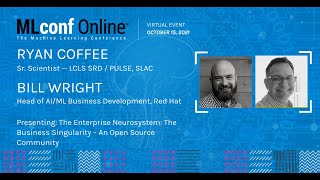
Bio
Ryan’s expertise spans the fields of ultrafast and nonlinear optical methods, x-ray free-electron lasers and medical imaging and data analysis methods. He has spent the better part of the last decade co-designing machine learning methods that tightly integrate into the physical implementations of x-ray and optical detector systems with streaming data processing at the sensor edge. With projects ranging from x-ray spectroscopy in molecules, attosecond x-ray pulse reconstruction, ultrafast optical response in materials, radiographic medical imaging, and tokamak plasma fusion, he has become an adamant proponent of data and model marketplaces for cross-domain innovative sharing with built in provenance and value tracking. He foresees this as enabling infrastructure for an intelligent data and model ecosystem with quantifiable metric based dynamic retention, security, privacy, and access control. Ryan earned his Bachelor of Arts in Philosophy and Bachelor of Science in Physics from the University of Arkansas followed by a PhD in Atomic, Molecular and Optical Physics from the University of Connecticut. He joined the PULSE Institute at SLAC as a Research Associate in 2006 and led the first laser pumped, x-ray probed experiment at the Linac Coherent Light Source (LCLS) in 2009. Since then he has been Staff and later Senior Staff Research Scientist in PULSE and LCLS with an emphasis on AMO science and instrumentation and the requisite computational methods for our imminent move to a million frames per second machine with the LCLS-II. In that context he has been a core member of the SLAC AI Initiative since its inception with particular emphasis on Machine Learning for real-time information extraction at the sensor edge.