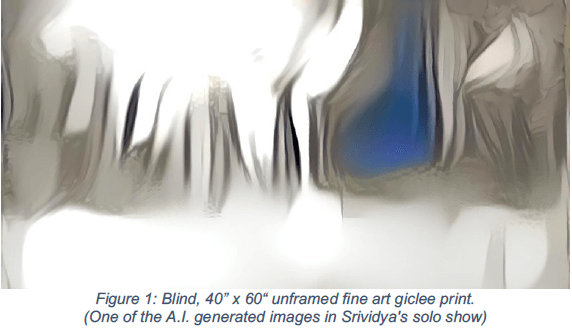
The invention of Generative Adversarial Networks1 and associated tools for effective style transfer2 has opened up new vistas for artists. At the same time these developments also raise new questions about how we evaluate A.I., art, and A.I. generated art. These A.I. tools are not only creating a new genre of art, but also a new generation of artists.
In the journey towards artificial general intelligence, we have reached a milestone where we now talk about machines being imbued with creativity. However, it raises difficult questions like:
- What constitutes art? – Not every primate with a DSLR is a photographer. Similarly, the mere use of Photoshop or a GAN can’t define an artist.
- What constitutes good art? – ‘Quidquid latine dictum sit, altum videtur’. Anything said in Latin sounds profound, but not everything that looks psychedelic is art3.
- How should an art critic evaluate these? – Unlike pop music, it can take years to learn to appreciate classical music. To an untrained eye, even Cy Twombly or Willem de Kooning may not look impressive.
- What is the analogue for cubism or impressionism in A.I. generated art? – Both traditional art and photography went through several phases like impressionism, cubism, abstract expressionism. Starting from Henri Matisse, and Paul Cezanne, western artists have moved away from attempts to mimic the world outside. Are we entering an age where A.I. generated art Art will also go through phases?
In this blog post, we begin to grapple with these questions and offer one perspective. Have you noticed that humans are the only species on the planet that makes art? John Keats rightfully said: “Beauty is truth, truth beauty,” – that is all Ye know on earth, and all ye need to know. “4
Art is the medium through which humans recognize and appreciate beauty. We make art for a few reasons – to process and recall events or memories, to evoke an emotional response from viewers, to express without using words, and to ultimately understand who we are.
Why is art the next frontier for A.I.?
To understand where we will go, it is always good to see where we came from. The first step in this story was when we could use computers to automate tasks that were routine and tedious for humans.
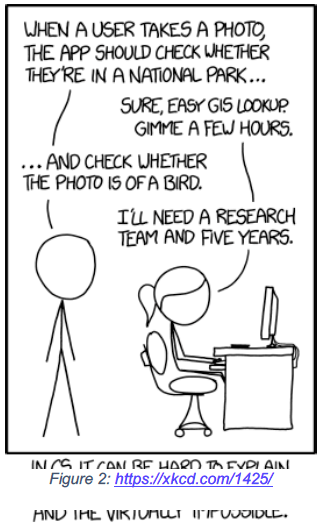
The next step in the journey is when computers could be trained to intuitively understand things that human beings can do like recognizing faces or differentiating between cats and dogs. In this context, we recall Moravek’s paradox – “it is comparatively easy to make computers exhibit adult level performance on intelligence tests or playing checkers, and difficult or impossible to give them the skills of a one year-old when it comes to perception and mobility”.
Instead of hard-coding Gabor filters or performing time-consuming feature engineering, the promise of deep learning architectures has been to learn effective representations themselves to solve problems around image, text and speech processing. Even here, we don’t quite have solutions for everything – be it ghost images (elephant in room)5 or adversarial examples6. One wonders if mimicking nature or the human brain better would resolve these questions. But then, arguably, planes not flapping their wings doesn’t make them inferior to birds in any way.
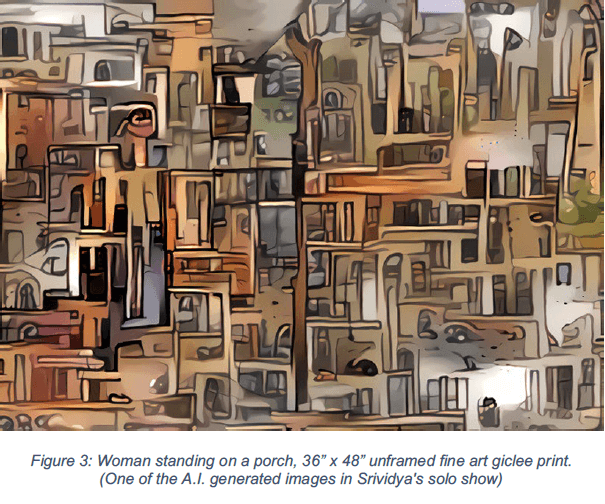
The third stage of the A.I. revolution is an attempt to imbue machines with creativity. This is even more tricky and subjective. Every artist has a deeply personal reason motivating their creative process and output. For me, the purpose is to delight those, who set aside searching for purposes in life, if only it be for the brief time they spend gazing at my work. Beneath the ever-running reductionist outer mind, we all possess a silent mental substratum. Reposing in this substratum – termed ‘chitta’ in Sanskrit7 – yields a serene sense of bliss and also an effortless identification with a universal transcendent self. Our innate propensities embedded in our sub-conscious prevent us from resting perpetually in this tranquil state. Instead, these propensities impel us to react to all inputs in Pavlovian reflexive fashion.
Since verisimilitude is processed very quickly by our analytical outer mind, I concentrate on the abstract which by its very nature has to be appreciated by our silent subconscious. The aim of my art then is to gently attenuate these propensities by using abstraction to directly color the chitta and induce in it a sense of “impersonal” delight that is distinct from the usual responses of either joy or disappointment. Art perceived by this inner intuitive self, escapes the confines of being just an artist’s work and is uniquely reborn on every viewer’s gaze with a unique effect on each individual.
A few of my A.I. generated images are currently on view in my solo exhibition happening at Viridian Artists gallery in the Chelsea art district in Manhattan from Oct 30 – Nov 24, 2018. If you are around, feel free to drop by. You can also follow me on Instagram at @srividyakr.

Sources:
1 – Goodfellow et al. (2014) , “Generative adversarial nets”, NIPS Vol 2, Page 2672 – 2680.
2 – Gatys et al. (2016), “Image style transfer using Convolutional Neural Networks”, IEEE Conference on Computer Vision and Pattern Recognition (CVPR).
3 – https://www.fastcompany.com/3057368/inside-googles-first-deepdream-art-show
4 – Ode on a Grecian Urn by John Keats
5 – https://www.quantamagazine.org/machine-learning-confronts-the-elephant-in-the-room-20180920/
6 – Szegedy et al. (2014), “Intriguing properties of neural networks”, International Conference on Learning Representations
7 – Not translated
